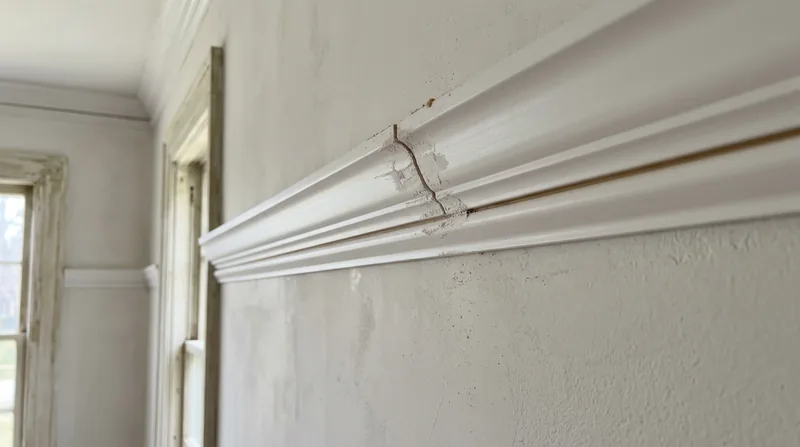




Crown molding and baseboard installation in Greensboro sets the architectural tone for rooms where it matters most. The Colonial Revival and Craftsman homes that define Fisher Park, Old Irving Park, and the adjoining historic neighborhoods demand trim work that respects their original proportions and detail. Whether you're restoring coped joints in a 1920s bungalow or installing clean, contemporary baseboard in a postwar brick ranch, the difference between competent and excellent trim work is visible from across the room. We install crown molding, baseboards, chair rail, and window casing with the precision and finish these homes deserve. Our carpenters understand the specific challenges of Greensboro's older stock: plaster walls that aren't perfectly square, century-old heart-pine floors that sit slightly uneven, and the high humidity that swells wood seasonally and demands careful scripting and caulk work to stay tight. For new construction and modern homes in Adams Farm or Lake Jeanette, we deliver crisp, contemporary trim that doesn't apologize for being new.
Why Crown Molding and Baseboard Installation Matters in Greensboro's Historic Homes
Greensboro's architectural heritage is built on detail. The bungalows and Colonial Revivals that anchor the Fisher Park district and surrounding neighborhoods were designed with specific crown profiles, baseboard heights, and casing widths that define their character. When those original profiles are removed or replaced with stock trim that doesn't match, the room loses its period integrity. When baseboards are installed with visible gaps, uneven spacing, or poor caulk lines, every visitor notices it. Crown molding and baseboard work in historic homes requires understanding the original design intent and the ability to scribe, cope joints, and finish with caulk that holds and looks clean through Greensboro's humid summers and dry winters.
- We match existing profiles and proportions in historic homes, or recommend period-appropriate alternatives if originals are damaged beyond repair.
- We cut and fit coped joints where moldings meet at inside corners, a technique that allows for seasonal wood movement without opening gaps.
- We scribe baseboards and casing to fit uneven plaster walls and floors without forcing pieces out of square.
- We caulk and finish with precision, using paintable caulk that stays flexible and doesn't shrink or crack as the house moves through the seasons.
- We work carefully around original woodwork, hardware, and plaster to preserve what's worth keeping.
Proper installation protects the integrity of the room and ensures the trim looks finished and professional for decades.
Key info: Greensboro's humidity swings between 30% and 80% seasonally, which means wood expands and contracts constantly. Coped joints and flexible caulk are not cosmetic choices, they are functional necessities. A baseboard installed tight in winter will gap in summer if it isn't cut and caulked to allow movement.
For guidance on permits and work that may require approval in historic districts, check with the City of Greensboro Planning and Development Department, which oversees historic district guidelines for Fisher Park and other protected neighborhoods.
How We Install Crown Molding and Baseboard in Greensboro Homes
Every room starts with a site assessment. We measure wall square and level, check for plaster or drywall irregularities, and identify existing trim profiles if we're matching or replacing. We discuss finish options, caulk color, and whether the homeowner wants a painted or stained look. From there, we work systematically, installing baseboard first, then window and door casing, and finally crown molding. Each piece is cut, fitted, and fastened with finish nails or construction adhesive where appropriate. Gaps are caulked, sanded, and finished to look seamless.
- We locate and fasten to studs and blocking behind walls, never relying on drywall anchors alone for crown molding or baseboard.
- We cut and fit coped joints at inside corners so the profile of one piece wraps around the profile of the other, allowing for wood movement.
- We scribe baseboards and casing to fit uneven walls by holding the trim in place and tracing the wall contour, then cutting to fit.
- We caulk all gaps and nail holes with paintable caulk, sand smooth once dry, and prime or paint as needed.
- We protect floors and existing trim with drop cloths and painter's tape, and leave the room clean and ready for paint or stain.
The result is trim that sits tight, looks finished, and moves with the house without opening gaps or cracking caulk.
Example: A 1920s Craftsman bungalow in Glenwood had original 3.5-inch baseboards with a distinctive ogee profile. The homeowner wanted to restore two rooms while keeping the original trim in the hallway. We sourced matching molding stock, installed it with coped joints at corners, and finished with caulk and paint that matched the original. The new trim is indistinguishable from what was already there.
For similar finish carpentry work throughout your home, see our finish and trim carpentry page.
Crown Molding and Baseboard Installation Methods
| Approach | Description | Best for |
|---|---|---|
| Coped Joints | One piece of molding is cut with a coping saw to wrap around the profile of the adjoining piece at inside corners, allowing for seasonal wood movement. | Historic homes, painted trim, any installation where gaps must not appear as wood moves seasonally. |
| Scribed Baseboards | The trim is held in place and the wall contour is traced onto it, then cut to fit perfectly against uneven plaster or drywall. | Older homes with irregular walls, rooms where gaps between trim and wall are unacceptable. |
| Stud-Fastened Installation | Trim is located and nailed directly into wall studs or blocking, not into drywall alone, ensuring long-term holding power. | All crown molding, heavy baseboards, and any trim in areas where movement or vibration is common. |
| Flexible Caulk Finish | Paintable caulk is applied to all gaps and nail holes, sanded smooth, and finished to match the trim color and surface. | All installations, especially in humid climates where wood expands and contracts seasonally. |
| Profile Matching | We source or mill molding stock that matches existing profiles in historic homes, ensuring restoration work is visually seamless. | Historic district homes, partial replacements, rooms where original trim remains in adjacent spaces. |
Crown Molding and Baseboard Installation Cost in Greensboro: What to Expect
Crown molding and baseboard installation costs in Greensboro start at around $450 for a single room with straightforward walls and standard molding profiles. The final price depends on several factors: the linear footage of trim required, the complexity of the wall (square and level versus irregular plaster), the molding profile you choose (stock versus custom or historic matching), whether coped joints are needed, and the finish (paint, stain, or polyurethane). A small bedroom with simple baseboards and no crown molding may run $600 to $1,200. A larger living room with crown molding, baseboards, and window casing in a historic home with uneven walls can run $2,500 to $5,000 or more, especially if profile matching or extensive scribing is required.
We recommend getting two or three estimates from local carpenters so you can compare approach, timeline, and price. Be clear about what you want: painted or stained, coped or mitered joints, profile matching or contemporary design. A detailed estimate should break down labor and materials and explain what happens at inside and outside corners. Visit our pricing page for more detail on how we structure estimates and what factors drive the final cost.
Crown Molding and Baseboard Installation Near Me: What Greensboro Homeowners Should Know When Hiring a Carpenter
Choosing a carpenter for crown molding and baseboard work requires looking beyond price. Ask whether the carpenter is fully insured and whether they have references from recent trim work in homes similar to yours. If your home is in a historic district like Fisher Park or Old Irving Park, ask whether the carpenter has experience with historic profiles and has worked with homeowners' associations or design review boards. Get a written estimate that lists the specific moldings, the linear footage, the labor method (coped joints, scribing, fastening approach), and the finish plan. Ask whether permits are required for your scope of work. In some cases, especially if you're working in a historic district, the local building department or historic preservation office may have guidelines about molding profiles or finishes. Call the City of Greensboro Planning and Development Department to confirm requirements before you start.
We are fully insured, and our carpenters have installed crown molding and baseboards in dozens of Greensboro homes across all the neighborhoods from Fisher Park to Lake Jeanette. We provide a free estimate within 24 hours. Call us at (336) 203-7049 or request a free estimate online.
Crown Molding & Baseboard Installation in Greensboro: Pricing Guide
| Service | Price | Details |
|---|---|---|
| Single room baseboard only | Starting at $450 | Includes baseboard installation, coped joints at corners, caulk and finish for one room up to 150 linear feet |
| Room with crown molding and baseboard | Starting at $1,200 | Crown molding, baseboard, coped joints, scribed fit where needed, caulk finish in standard stock profiles |
| Historic profile matching or extensive scribing | On estimate | Sourcing custom or milled molding, scribing irregular plaster walls, coped joints, and finish work requires site assessment |
| Multi-room project or whole-house trim | On estimate | Larger scope with multiple rooms, window casing, door casing, and chair rail benefit from itemized quote after walkthrough |
| Estimate and consultation | Free | Response within 24 hours, site visit included, no obligation to book, call (336) 203-7049 |
Indicative pricing, the exact cost depends on square footage, finish, and site access. Free personalized estimate within 24h at (336) 203-7049.


